Za’atar
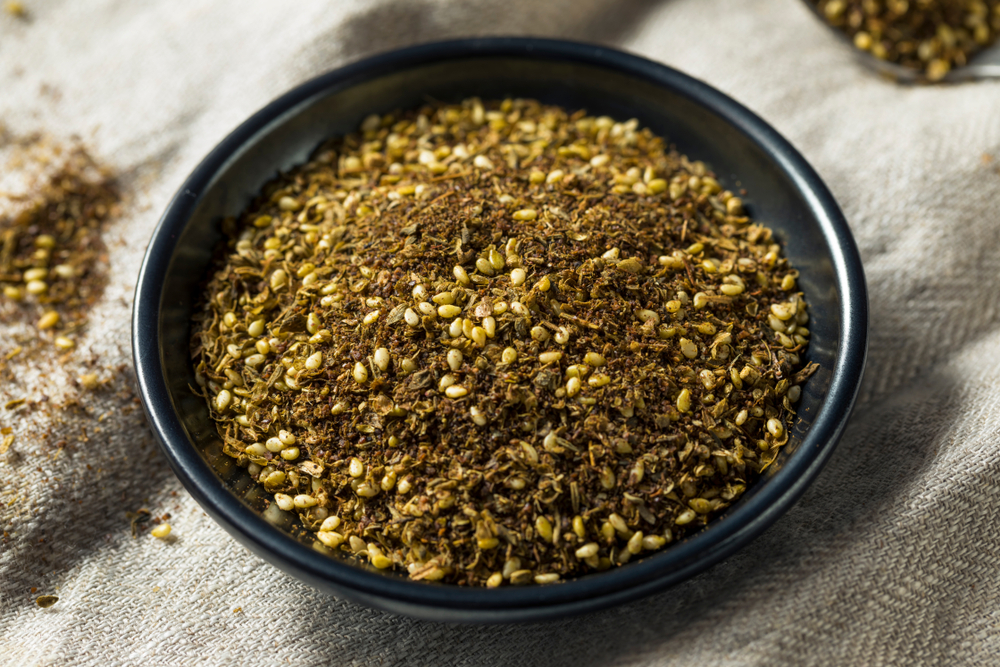
Za’atar is a mix of spices, including dried oregano, thyme, or marjoram, sumac, and toasted sesame seeds. It dates back to 13th century. It was derived from the Greek word “Thumus” which means courage of strength. It was used to treat infections of bacteria and fungus for medical purposes.
It is mostly used as a table condiment which is stirred into olive oil. In Lebanon, it is dusted on oatmeal, eggs and yogurt. It is widely used in salads and also as seasonings in vegetables.
Za’atar is known to have health benefits such as suppressing coughing and lowering blood pressure but research also shows that za’atar can:
- Lower internal parasites.
- Assist digestion and prevent the chances of allergic reactions.
- The mixture of Za’atar, honey and boiling herb treats whooping cough, stomach problems, sore throat and catarrh.
- It elevates mood, stimulates brain and improves memory.
- It is anti-inflammatory and helps to cure psoriasis and eczema.
- It also treats insect bites.
- It cures conjunctivitis, pink eye and styes
Za’atar is loaded with organic compounds as well as nutrients such as gallic acid, thymol, quercetina and carvacrol. It has tangy, toasty and nutty flavor. It is packed with minerals, flavonoids and nutrients which works wonder for the health.
- Treating Chronic Diseases: Sumac provides a healthy supply of quercetin, it is able to neutralize free radicals and prevent cancer proliferation.
- Clear Respiratory Tracts: When it is brewed as tea, it provides expectorant properties. Thyme can help to clear out the respiratory tracts, causing you to cough out phlegm and mucus. The immune-boosting abilities of the herbs in za’atar also help to ward off illnesses.
- Boost Cognition: There are strong traditional beliefs about the cognitive impact of za’atar, including its possibility of improving memory. People used to sleep with za’atar beneath their pillow. The circulation-boosting powers of za’atar, as well as the rich mineral content, boosts brain power and stimulates neural activity.
- Soothe Inflammation: It is used as salve or paste on the inflamed areas such as aching joints and bug bites. If consumed, it provides anti-inflammatory properties for gout, arthritis, stomach and respiratory system.
- Increase Energy: The high concentration of polyphenols and flavonoids found in za’atar boosts the metabolism. It also can help you sleep better due to the presence of magnesium.
- Improve Mood: Studies and traditional evidence have linked za’atar with improved mood and decreased depression. This use has been popular for generations in the Middle East. The phenol that comes from thyme and oregano may have direct mood-boosting effects by impacting the hormones being released and regulated throughout the body. Carvacrol is associated with increase in energy and cognitive function.
- Strengthen Bones: Za’atar has high content of copper, calcium, magnesium and iron. The regular consumption of Za’atar helps to prevent the risk of osteoporosis as well as degenerative bone conditions.
- Circulatory Effects: Za’atar helps to promote oxygenated blood circulation due to its iron content. Iron is essential for the formation of hemoglobin which transports red blood cells all over the body and organs.
- Immune System Aid: Za’atar has anti-microbial, anti-fungal and antiseptic properties. If applied externally or taken internally, za’atar helps to maintain skin, gut, nervous system, respiratory system
- Heal the Skin: This spice has anti-inflammatory properties promotes the skin’s appearance, speeds healing of wounds and also fades blemishes and age spots.
How to Buy
Za’atar is made with a wide range of ingredients in varying proportions. Most grocery store will have it in their dried herb section. You might have to sample a few different varieties and decide which is the best ratio for you.
When buying za’atar, look for very green (a sign that the dried herbs are new and potent), and not clumpy. It is best of you can find locally-made za’atar, since it’s likely to be fresher.
How to Store
Za’atar is like any spice and will lose flavor over time. Buy it in small batches that you’ll use up before your stash goes stale. You will know it’s no good when it no longer smells fragrant.
How to Cook
If you can’t find za’atar at the store, experiment with making an approximation at home. Play around with different quantities of crushed dried oregano, dried thyme, and dried marjoram, and add sumac, toasted sesame seeds, and, if you want, salt.
Sprinkle za’atar on sliced tomatoes, add it to a salad, roast veggie with it. Consider adding it when you’re looking for a spice mix that’s earthy, savory, and tangy. In the Middle East, za’atar is often eaten with oil-dipped bread.
If you are not going to be heating up za’atar in the cooking process, you can bring out the most flavor by blooming it in hot oil or butter. Heat the fat in a small skillet, take it off the heat, and add the za’atar, then drizzle over popcorn or toast.