Hazelnuts
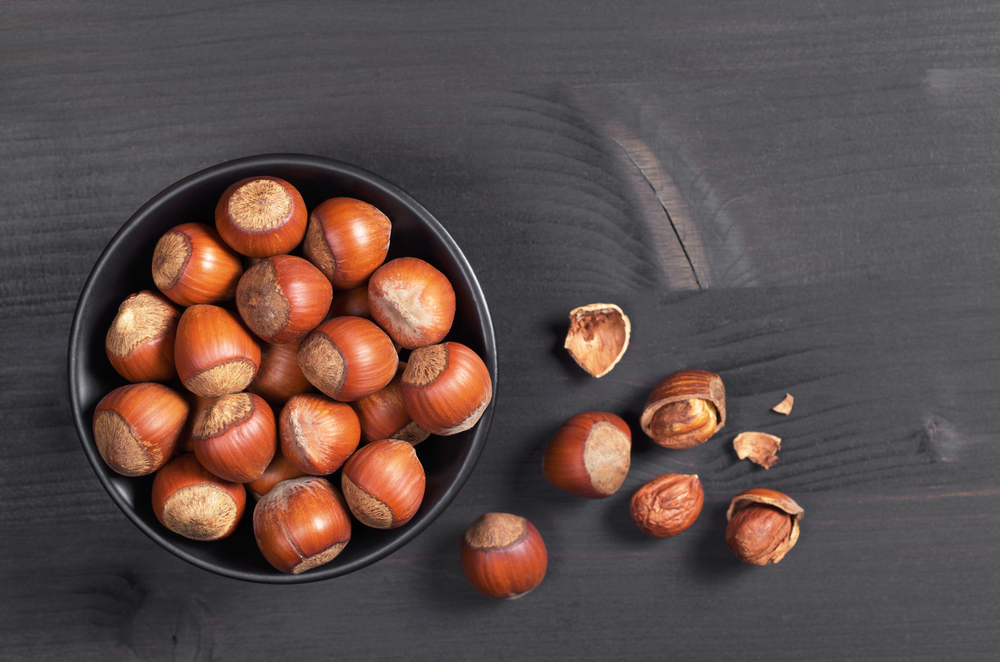
Hazelnuts have been harvested from the Black Sea region of Turkey for at least 2,300 years. Turkey is still the world’s primary hazelnut exporter. Today, they’re also grown in the U.S. Pacific Northwest.
In ancient times, the hazelnut was used as a medicine and a tonic. It was mentioned in Chinese manuscripts that date back as far as 2838 B.C.
The hazelnut blooms and pollinates in the middle of the winter. After pollination, the flower stays dormant until June, when the nut begins to form. During the summer months, the nuts mature, changing from green to shades of hazel. Hazelnuts are typically harvested in late September or October after they fall to the ground.
Hazelnuts are also called filbert, named by French settlers in England. Filberts were named after St. Philibert, because his day (August 22) regularly coincided with ripening dates of the nuts. The English later changed the name to hazelnut, and in 1981, the Oregon Filbert Commission decided to promote the name as the production in the U.S. expanded.
Tree nuts are some of the most nutrient-rich snacks you can add to your diet. And, although there is some reluctance to eat nuts due to fear over their fat and calories, with a proper serving sizes, nuts can provide filling protein, fiber, unsaturated fats, and many other important vitamins and minerals. Hazelnuts contain compounds that can battle heart disease and diabetes, boost brain function, and even help you lose weight.
Hazelnuts are a particularly versatile nut because of all of the different ways they can be used – raw, roasted, or in a paste. They’re commonly found added to chocolate or in Nutella. Hazelnut flavoring is commonly used for coffee and pastries, as well as a topping and garnish for desserts and savory dishes.
One ounce (28 grams, or about 20 nuts) of hazelnuts contain about:
- 176 calories
- 4.7 grams carbohydrates
- 4.2 grams protein
- 17 grams fat
- 2.7 grams fiber
- 1.7 milligrams manganese (86 percent DV)
- 0.5 milligram copper (24 percent DV)
- 4.2 milligrams vitamin E (21 percent DV)
- 0.2 milligram thiamine (12 percent DV)
- 45.6 milligrams magnesium (11 percent DV)
- 0.2 milligram vitamin B6 (8 percent DV)
- 31.6 micrograms folate (8 percent DV)
- 81.2 milligrams phosphorus (8 percent DV)
- 1.3 milligrams iron (7 percent DV)
- 4 micrograms vitamin K (5 percent DV)
- 190 milligrams potassium (5 percent DV)
- 0.7 milligram zinc (5 percent DV)
- 2.7 grams of dietary fiber ( 1 percent DV)
Hazelnuts also contain vitamin C, niacin and calcium, vitamin B6, folate, phosphorus, potassium and zinc.
Additionally, they are a rich source of mono and polyunsaturated fats and contain a good amount of omega-6 and omega-9 fatty acids, such as oleic acid. However, hazelnuts contain phytic acid, which has been shown to impair the absorption of some minerals, like iron and zinc, from the nuts. Soaking them for a couple of hours, rinsing and drying them on a low temperature in the oven will mitigate the effects of the phytic acid.
The most abundant antioxidants in hazelnuts are known as phenolic compounds. They are proven to help decrease blood cholesterol and inflammation. They are also beneficial for heart health and protecting against cancer.
The majority of the antioxidants present are concentrated in the skin of the nut. However, this antioxidant content decreases after the roasting process. I recommended eating these nuts with the skin but most recipes ask that you remove them. An 8-week study showed that eating hazelnuts, with or without the skin, significantly decreased oxidative stress compared to not eating hazelnuts.
Hazelnuts also have the highest content of proanthocyanidins (PACs), a class of polyphenols that give foods like red wine and dark chocolate their “astringent mouth feel” compared to other nuts. Some test-tube and animal studies have shown that proanthocyanidins may help prevent and treat some types of cancers.
Eating tree nuts fights heart disease. There are a handful of vitamins and minerals found in hazelnuts that promote heart health. Aside from being a great source of fiber, they contain a large amount of monounsaturated fatty acids, which help to reduce LDL cholesterol and increase HDL cholesterol.
Studies conducted by the American Society for Nutrition and published in the European Journal of Nutrition showed that diets high in hazelnuts and other tree nuts resulted in lowered LDL cholesterol, reduced inflammation and improved blood lipids. The American Heart Association also recommends that, for optimum heart health, the majority of the daily fats that individuals should consume should be monounsaturated fats, which are the same found in hazelnuts.
In hazelnuts, the high concentration of antioxidants and healthy fats may increase antioxidant potential and lower cholesterol levels in the blood. One month-long study observed 21 people with high cholesterol levels who consumed 18 – 20% of their total daily calorie intake from hazelnuts. The results showed that cholesterol, triglycerides and bad LDL cholesterol levels were reduced. Participants also experienced improvements to artery health and inflammation markers in the blood.
A review of nine studies including over 400 people also saw reductions in bad LDL and total cholesterol levels in those who ate hazelnuts, while good HDL cholesterol and triglycerides remained unchanged.
Because hazelnuts also contain a considerable amount of magnesium, which helps to regulate the balance of calcium and potassium. Magnesium is also crucial to controlling blood pressure.
Thanks to hazelnuts’ high number of antioxidants, they’re important cancer-fighting foods. Hazelnuts provide 21% of DV of Vitamin E in a one ounce serving. Studies have shown vitamin E’s capabilities for decreasing risk for prostate, breast, colon and lung cancers, while also preventing the growth of mutations and tumors. Vitamin E has also shown possibilities of aiding in multi-drug resistance reversal and cancer treatments.
The vitamin E in hazelnuts can help maintain healthy skin and hair by improving moisture and elasticity. Vitamin E’s antioxidant capabilities can help prevent damage from UV rays or cigarette smoke. It also helps improve circulation and reduce inflammation. Vitamin E is has been shown to help treat scars, acne and wrinkles as well, thanks to its ability to regenerate skin cells.
Higher levels of vitamin E coincide with less cognitive decline as individuals age and can also have a major role in preventing and treating diseases of the mind like Alzheimer’s, dementia and Parkinson’s. Manganese has been proven to play a major role in the brain activity connected to cognitive function as well.
In other studies, manganese complexes were found to exhibit potential anti tumor activity. An ounce of hazelnuts provides 86% DV in one ounce. Research conducted by the School of Chemistry and Chemical Engineering at Jiangsu University in China and published in the Journal of Inorganic Biochemistry found that manganese complex could be a “potential anti-tumor complex to target the mitochondria.”
Hazelnuts boost your metabolism. Thiamine (12% DV) plays a major part in maintaining a healthy metabolism. It helps convert carbs into glucose, which is the source of energy that the body uses to operate. Thiamine also has a hand in producing new red blood cells, which are optimum in maintaining energy.
The protein, fiber and high fat composition of hazelnuts helps you feel full, which prevents overeating and keeps you satisfied for longer.
Hazelnuts are full of elements that can improve brain and cognitive function and help prevent degenerative diseases later in life. The high levels of vitamin E, manganese, thiamine, folate, and fatty acids in hazelnuts can help keep your brain sharp.
Thiamine (12% DV) is commonly referred to as the “nerve vitamin” and plays a role in nerve function throughout the body, which plays a key role in cognitive function. It’s also why thiamine deficiency can be damaging to the brain. The high levels of fatty-acids and protein help the nervous system and also help to combat depression. In a recent study published in Nutritional Neuroscience, hazelnuts were shown to be able to improve healthy aging, improve memory and lessen anxiety.
In a 2015 study published in the American Journal of Clinical Nutrition, an interesting result occurred regarding how diabetics reacted when supplementing their daily diets with tree nuts. Like other studies, it was concluded that individuals introduced to heightened nut consumption in their diets experienced lowered cholesterol levels. The surprising variable was that higher nut doses provided a stronger effect on diabetics, doing more to lower blood lipids than for non-diabetics.
Diabetics with high cholesterol should consider adding hazelnuts and other tree nuts to their daily diets. Proven to improve glucose intolerance, hazelnuts’ high levels of manganese are also helpful in the fight against diabetes when used as a diet supplement.
Interestingly, eating 60 grams of hazelnuts every day for 12 weeks helped reduce inflammatory markers in overweight and obese people. A study examined how eating hazelnuts affected inflammation. It showed that eating 40 grams of hazelnuts may reduce the inflammatory response in healthy people.
Oleic acid, which is the main fatty acid in hazelnuts, has been shown to have beneficial effects on insulin sensitivity. A two-month study showed that a diet rich in oleic acid significantly reduced fasting blood sugar and insulin levels.
How to Buy
Hazelnuts can be purchased most anywhere nuts are sold, including grocery stores in the nut and grain section, as well as in health food shops and gourmet food shops, especially those specializing in baking supplies. Because they have a long shelf, filberts can be bought in bulk, then stored in small airtight packages in a cool, dry place. However, make sure the nuts you are purchasing have been recently toasted or harvested, especially if you are buying shelled filberts.
You can purchase hazelnuts raw, roasted, whole, sliced or ground.
How to Store
Shelled, toasted hazelnuts can be kept in an airtight container in a cool, dry place for six to 12 months but should be tasted periodically to make sure they have not gone rancid. Hazelnuts in the shell can also be stored in the same way for up to a year. Both shelled and unshelled filberts can be placed in airtight bags and stored in the freezer for a year or more.
How to Cook
Hazelnuts can be used in many different ways – in cakes, cookies, and chocolate production, and in soups, salads, and other savory dishes. They can also be used to make a high-quality finishing oil, or as a flavoring for coffee and other beverages. They make tasty ice cream too.
Hazelnuts are excellent toasted and served before a meal with hors d’oeuvres. Crack and toasted filberts sprinkled over sweet potato soup are delicious.
If you are starting with whole filberts in the shell, the shell will need to be cracked and the nuts removed. If you have to take off the skin for a recipe, this can be done in one of two ways: Place the shelled filberts on a baking sheet and heat in a preheated 300 F oven for about 15 minutes, then rub them with a damp towel. Alternatively, the husks can be removed by blanching: Add baking soda to boiling water, add the filberts, boil for about 3 to 4 minutes, then test one by running it under cold water and gently rubbing it. If the skin doesn’t slip off easily, boil them a bit longer. Remember that the highest concentration of antioxidants is in the skin.
Peeled hazelnuts can be ground to make flour for baking or to make hazelnut butter, a nutritious spread.
Hazelnuts are delicious coated with chocolate or spices, like cinnamon or cayenne.