Bitter Melon
Bitter melon, or Goya, is also referred to as bitter gourd, Karela, or Balsam Pear. it is a tropical vine that belongs to the gourd family and is closely related to zucchini, squash, pumpkin, and cucumber. It is the most bitter of all fruits and vegetables.
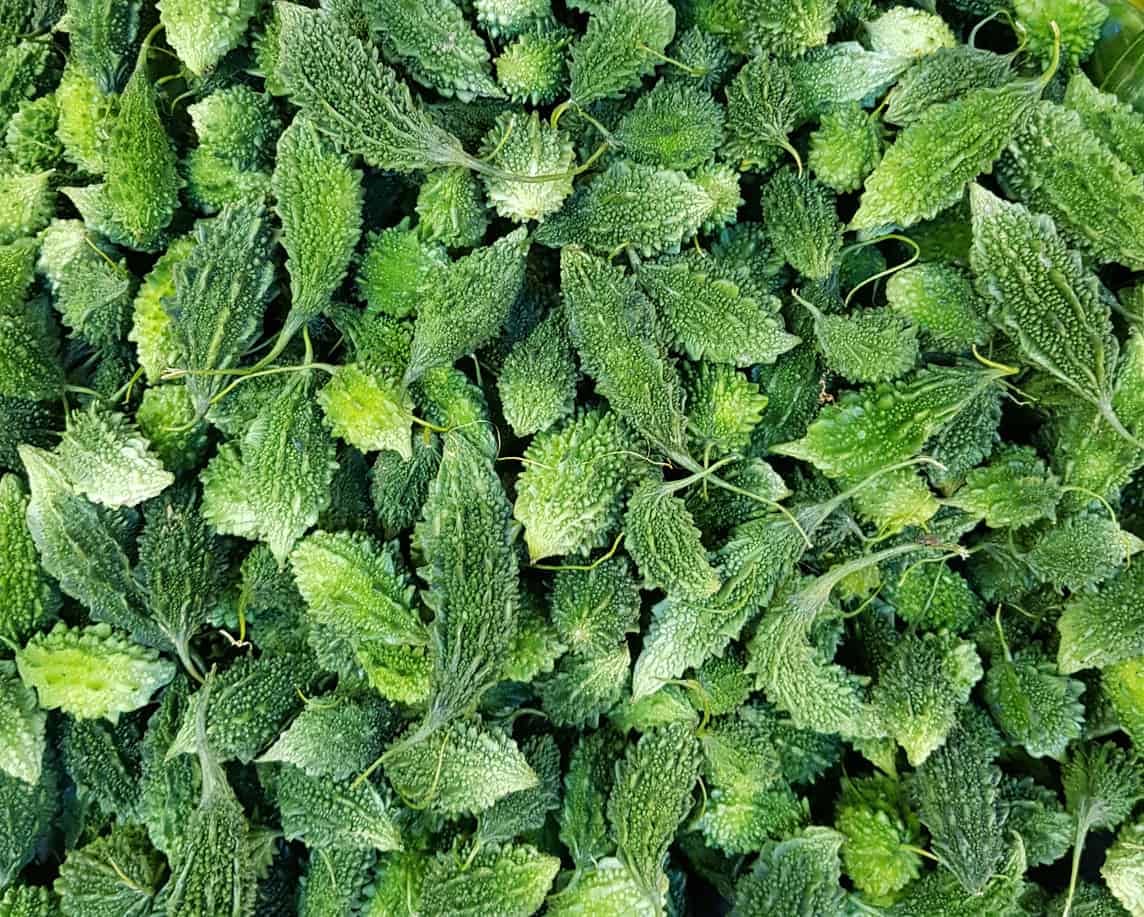
Bitter melon is a staple in many types of Asian cuisine. The Chinese variety is typically long, pale green, and covered with wart-like bumps and the Indian variety is more narrow and has pointed ends with rough, jagged spikes on the rind. The plant gets its name from its taste. It becomes more and more bitter as it ripens.
Bitter melon is great at lowering the body’s blood sugar. This is because bitter melon has properties that act like insulin, which helps bring glucose into the cells for energy. The consumption of bitter melon can help your cells utilize glucose and move it to your liver, muscles, and fat. This insulin-like activity may help to protect against insulin resistance and keep your blood sugar from rising.
In recent years, several studies confirmed the fruit’s role in blood sugar control. A 3-month study in 24 adults with diabetes showed that taking 2,000 mg of bitter melon daily decreased blood sugar and hemoglobin A1c, a test used to measure blood sugar control over three months. Another study in 40 people with diabetes found that taking 2,000 mg per day of bitter melon for 4 weeks led to a modest reduction in blood sugar levels. Bitter melon also significantly decreased levels of fructosamine, another marker of long-term blood sugar control.
The melon may also be able to help your body retain nutrients by blocking their conversion to glucose that ends up in your blood stream.
Bitter melon is a great source of several key nutrients.
One cup of raw bitter melon provides:
- Calories: 20
- Carbs: 4 grams
- Fiber: 2 grams – about 8% of your daily needs
- Vitamin C: 93% of the Reference Daily Intake (RDI)
- Vitamin A: 44% of the RDI
- Folate: 17% of the RDI
- Potassium: 8% of the RDI
- Zinc: 5% of the RDI
- Iron: 4% of the RDI
Bitter melon can be helpful in ridding the body of kidney stones through naturally breaking them down. Bitter melon reduces high acid that help produce painful kidney stones. Infuse bitter melon powder with water and sip the tea.
Bitter melon is a good source of catechin, gallic acid, epicatechin, and chlorogenic acid – powerful antioxidant compounds that can help protect your cells against damage.
Research suggests that bitter melon contains certain compounds with cancer-fighting properties. For example, one test-tube study showed that bitter melon extract was effective at killing cancer cells of the stomach, colon, lung, and nasopharynx – the area located behind the nose at the back of your throat. Another test-tube study had similar findings, reporting that bitter melon extract was able to block the growth and spread of breast cancer cells while also promoting cancer cell death. (These studies were performed using concentrated amounts of bitter melon extract on individual cells in a laboratory.)
Several animal studies found that bitter melon may decrease cholesterol levels to support overall heart health.
One study in rats on a high-cholesterol diet observed that administering bitter melon extract led to significant decreases in levels of total cholesterol, LDL cholesterol, and triglycerides. Another study noted that giving rats a bitter melon extract significantly reduced cholesterol levels compared to a placebo. Higher doses of bitter melon showed the greatest decrease.
How to Buy
Many Asian grocery stores sell bitter melon as a whole food.
- Select bitter melons that are small, bright green, firm, and without blemish or mold.
- Bright dark green specimens will be less bitter tasting.
Bitter melon is also available as a powder and in capsules.
How to Store
Keep fresh bitter melon wrapped in a tea towel in the vegetable drawer of the refrigerator for 4 to 5 days.
Bitter melons do not freeze well.
How to Cook
Bitter melon has a sharp flavor but works well in many dishes.
- Bitter melon does not need to be peeled if sliced thinly. But you can trim and peel it if you prefer.
- Seeds can be removed or not; they may bring an additional bitterness to a serving especially as the gourd matures. To remove the seeds, cut the gourd into slices and pop out both seeds and pith with your finger, leaving a green ring, or halve the gourd lengthwise and scoop out the seed.
- Bitter melon can be sliced crosswise into 1-inch or thinner rounds before cooking.
- To stuff bitter melon, halve crosswise and ream out the core of seeds and pith.
- To draw the bitterness from the bitter melon, slice and liberally salt it and set aside for 30 minutes. You can then rinse and press or squeeze the slices, and press again, and pat dry before using. If the bitter melon is still too bitter blanch the slices in boiling water–1 teaspoon of baking to two quarts of water until the melon turns a bright emerald color then plunge it in cold water, and drain before cooking.
Bitter melon can be enjoyed raw or cooked. All of the plant is edible, but some people find it too bitter. To reduce the bitterness try:
- scraping the rough surface
- removing the seeds
- cooking it with vegetables such as potatoes or onions to dilute the taste
Ways to enjoy bitter melon:
- Juice bitter melon along with a few other fruits and vegetables.
- Add to stir-fry.
- Sauté bitter melon alongside tomatoes, garlic, and onions.
- Combine seedless bitter melon with your choice of dressing and garnish a salad.
- Use it in curries.
- Eat bitter melon stuffed with rice.