Apple
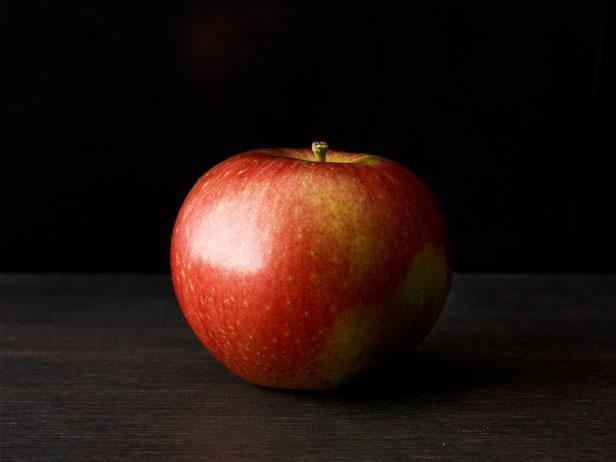
Freshly-picked, crispy apples are here!
There are 2,500 varieties of apples are grown in the United States. 7,500 varieties of apples are grown throughout the world. The most common apple varieties in the world are the Red Delicious, Gala, Granny Smith, Golden Delicious, Lady, Baldwin, McIntosh, Honey Crisp, Fuji, and Cortland. Most are sweet but the Granny Smith and Cripps Pink are tart.
A medium apple with a diameter of about 3 inches equals 1.5 cups of fruit. Two cups of fruit daily are recommended on a 2,000 a day calorie diet.
One medium apple offers the following nutrients:
- Calories: 95
- Carbs: 25 grams
- Fiber: 4 grams
- Vitamin C: 14% of the Reference Daily Intake (RDI)
- Potassium: 6% of the RDI
- Vitamin K: 5% of the RDI
An average sized apple also provides 2-4% of the RDI for manganese, copper, and the vitamins A, E, B1, B2, and B6.
To get the most out of apples, leave the skin on. It contains half of the fiber and many of the polyphenols.
Because apples are high in fiber and water, eating an apple can fill you up. In one study, people who ate apple slices before a meal felt fuller than those who consumed applesauce, apple juice, or no apple products. In the same study, those who started their meal with apple slices also ate an average of 200 fewer calories than those who didn’t.
In another 10-week study with 50 overweight women, participants who ate apples lost an average of 2 pounds and ate fewer calories overall, compared to those who ate oat cookies with a similar calorie and fiber content. Researchers think that apples are more filling because they’re less energy-dense, yet still deliver fiber and volume.
Apples have been linked to a lower risk of heart disease. One reason may be that apples contain soluble fiber which is the kind that can help lower your blood cholesterol levels.
They also contain polyphenols, which have antioxidant effects. Many of these are concentrated in the peel. One of these polyphenols is the flavonoid epicatechin, which may lower blood pressure. An analysis of studies found that high intakes of flavonoids were linked to a 20% lower risk of stroke. Flavonoids can help prevent heart disease by lowering blood pressure, reducing “bad” LDL oxidation, and acting as antioxidants.
There is another study that compares the effects of eating an apple a day to taking statins. Statins are a class of drugs known to lower cholesterol. The researchers concluded that apples would be almost as effective at reducing death from heart disease as the drugs.This wasn’t a controlled study, but the findings are interesting.
Another study linked consuming white-fleshed fruits and vegetables, such as apples and pears, to a reduced risk of stroke. For every 25 grams (about 1/5 cup of apple slices) consumed, the risk of stroke decreased by 9%.
Several studies have linked eating apples to a lower risk of type 2 diabetes. In one large study, eating an apple a day was linked to a 28% lower risk of type 2 diabetes, compared to not eating any apples. Even eating just a few apples per week had a similarly protective effect. It’s possible that the polyphenols in apples help prevent tissue damage to beta cells in your pancreas. Beta cells produce insulin in your body and are often damaged in people with type 2 diabetes.
Test-tube studies have shown a link between plant compounds in apples and a lower risk of cancer. One study in women reported that eating apples was linked to lower rates of death from cancer. Scientists believe that their antioxidant and anti-inflammatory effects may be responsible for their potential cancer-preventive effects.
Antioxidant-rich apples may help protect your lungs from oxidative damage. A large study in more than 68,000 women found that those who ate the most apples had the lowest risk of asthma. Apple skins contains the flavonoid quercetin, which can help regulate the immune system and reduce inflammation. These are two ways in which it may affect asthma and allergic reactions.
Researchers believe that the antioxidant and anti-inflammatory compounds in fruit may help promote bone density and strength. In one study, women ate a meal that either included fresh apples, peeled apples, applesauce, or no apple products. Those who ate apples lost less calcium from their bodies than the control group.
The class of painkillers known as nonsteroidal anti-inflammatory drugs (NSAIDs) can injure the lining of your stomach. A study in test tubes and rats found that freeze-dried apple extract helped protect stomach cells from injury due to NSAIDs.
Most research focuses on apple peel and flesh. However, apple juice may have benefits for age-related mental decline. In animal studies, juice concentrate reduced harmful reactive oxygen species (ROS) in brain tissue and minimized mental decline. Apple juice may help preserve acetylcholine, a neurotransmitter that can decline with age. Low levels of acetylcholine are linked to Alzheimer’s disease. Similarly, researchers who fed elderly rats whole apples found that a marker of the rats’ memory was restored to the level of younger rats.
How to Buy
Inspect your selection of apples and separate the apples that have bruises or soft spots from the apples that are undamaged. One bad apple can rot the bunch because apples produce a large amount of ethylene gas as they decay. Don’t store damaged apples with undamaged apples.
How to Store
Apples require a little bit of coolness in order to stay fresh in storage for a longer period of time. Cool temperatures alone are often enough to keep your apples fresh for weeks, but if you take a few extra precautions, you can even store apples up to several months. Aside from cold temperatures, apples also need a small amount of moisture to stay their freshest. Laying a damp paper towel over the apples provides just enough moisture, but if you do cover the apples with a wet paper towel, you need to make sure that you do not seal them in an airtight container or drawer.
When kept at room temperature in a basket, apples can stay fresh for about two days.
Tart, thick-skinned apples like Jonathans, Rome, Melrose, Fuji, and Granny Smiths can usually be kept longer. Sweet, thin-skinned apples, like Red Delicious or Golden Delicious, do not generally do as well.
If you go apple picking and want to save your bounty for longer here is what you can do:
Even apples that are in good shape give off a little ethylene gas, and as a result, apples that rub up against each other as they are in storage are more likely to rot faster. If one apple starts to rot while it is in storage, it could contaminate the other apples it touches, causing the entire bunch to spoil faster. Wrapping each apple individually prevents most of the potential damage caused when apples come into contact with each other.
- Choose a section newspaper that only has black ink since colored ink contains poisonous heavy metals.
- Place one apple on top of the stack of newsprint. Bring the top sheet up and fold it around the apple, gently twisting the corners together the keep the apple wrapped. The objective is only to prevent the apple from coming into contact with other apples, not to keep the air out.
- Continue wrapping each apple in a quarter sheet of newsprint until the entire bunch has been covered.
Chose a container that is not airtight, since you do not want to completely restrict airflow to your apples as you store them, but it should keep out most of the air. Insulating the box also helps regulate the temperature of your apples and the amount of airflow it receives. Line the containers with straw or perforated plastic liners.
Store them in an unheated basement, attic, or enclosed porch. The average temperature of the area should not drop too far below freezing, however, since the freezing process will rupture the cells of your apples, turning them to mush when they thaw.
Potatoes release a gas as they age, and this gas can cause apples to rot faster. You can keep the two types of produce in the same room or storage facility, but do not keep them side by side. Stored this way, apples can retain their freshness for several months.
How to Cook
An apple a day! It is easy and portable. No need to remove the skin.
Dried apple slices are easy to make: Core 1 small apple; slice into 1/8-inch-thick rounds. Arrange on an oiled baking sheet and bake at 200 degrees F until dry but still soft, 2 to 3 hours.
Make your own apple sauce with 4 pounds apples. Cut them into quarters. Simmer with 1 cup water, 3 tablespoons sugar and a pinch of salt, partially covered, until soft, 25 to 30 minutes. Pass through a food mill. Make applesauce spicy by replacing the sugar with 1/4 cup brown sugar and adding 6 allspice berries, 1 cinnamon stick and 1 1/2 teaspoons pumpkin pie spice before cooking. Remove the cinnamon before milling.
Apple-Braised Cabbage: Cook 4 cups shredded red cabbage and 1 chopped apple in a skillet with 3 tablespoons each butter, cider vinegar and water over medium heat, covered, until tender, 20 minutes.
Apple Stuffing: Cook 1/2 cup each chopped onion, celery and apple and 3 tablespoons each chopped almonds and prunes in 1/2 stick Earth Balance butter until soft. Transfer to a large bowl and stir in 1 cup veg, table broth, 12 cups stale bread cubes and 1 teaspoon kosher salt. Transfer to a baking dish, cover and bake at 375 degrees F, 45 minutes. Uncover and bake 15 more minutes.
Apple Galette: Toss 3 sliced, peeled and cored baking apples with 2 tablespoons each brown sugar, apricot jam and melted butter. Lay an 11-inch round of (Gluten Free, ready made) pie dough on a baking sheet. Add the filling, leaving a 2-inch border; fold in the edges. Bake at 350 degrees F until golden, 45 minutes to 1 hour.
Apple Chutney: Combine 2 chopped apples, 1/2 chopped red onion, 1 teaspoon minced ginger and 1/4 cup each chopped dried apricots, dried cranberries, sugar and red wine vinegar. Cook until the apples are tender, 15 minutes.