Amaranth
Amaranth is a group of more than 60 different species of grains that have been cultivated for about 8,000 years. These grains were once considered a staple food in the Inca, Maya and Aztec civilizations.
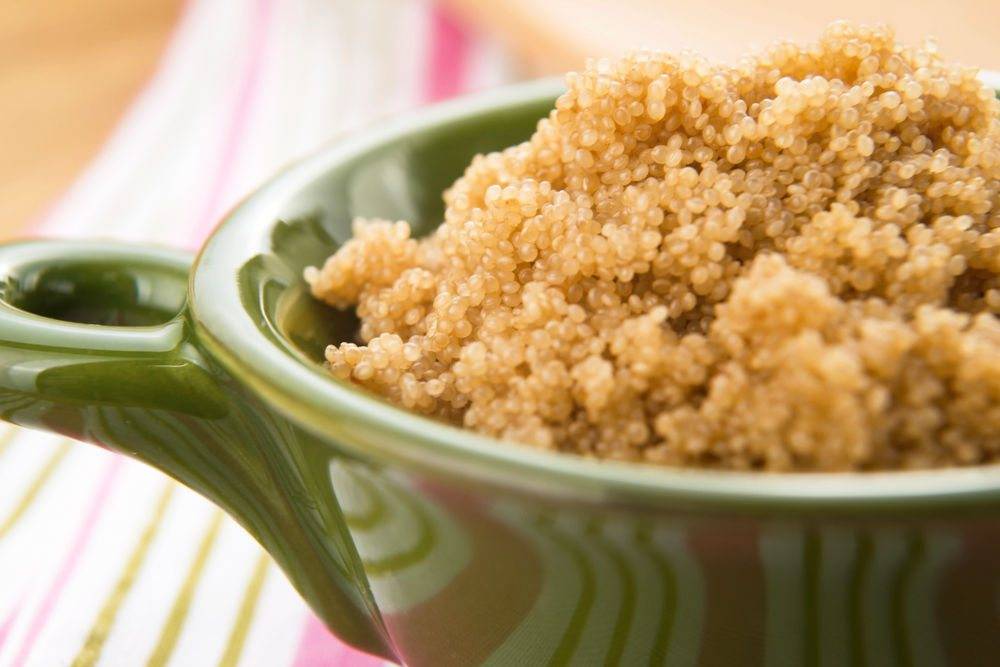
Amaranth is an ancient grain that is similar to quinoa. The small, light tan colored seed is cooked similarly to rice and oats and eaten as a pilaf or porridge. Amaranth is also ground into a flour, making it a dense but nutrition gluten-free baking flour.
Amaranth is considered a “pseudocereal” rather than an actual grain since it’s technically a seed. Other examples of pseudocereals are buckwheat and quinoa; both amaranth and quinoa are from the family Amaranthaceae. Like other cereal grains and pseudocereals, amaranth can be prepared in its whole seed form or ground into flour.
One cup of cooked amaranth contains the following nutrients:
- Calories: 251
- Protein: 9.3 grams
- Carbs: 46 grams
- Fat: 5.2 grams
- Manganese: 105% of the RDI
- Magnesium: 40% of the RDI
- Phosphorus: 36% of the RDI
- Iron: 29% of the RDI
- Selenium: 19% of the RDI
- Copper: 18% of the RDI
Amaranth is packed with manganese, exceeding your daily nutrient needs in just one serving. Manganese is especially important for brain function and believed to protect against certain neurological conditions.
It’s also rich in magnesium, an essential nutrient involved in nearly 300 reactions in the body, including DNA synthesis and muscle contraction. Amaranth is high in phosphorus, a mineral that is important for bone health. It’s also rich in iron, which helps your body produce blood.
Amaranth has a good amount of lysine, an essential amino acid which helps the body absorb calcium, build muscle, and produce energy.
Amaranth is a much smaller grain than quinoa. Another obvious differentiation is found in the aroma and flavor. Amaranth is much more distinctive compared to quinoa, with a grassy smell and nutty, strong herbal taste.
Cholesterol is a fat-like substance found throughout the body. Too much cholesterol can build up in the blood and cause arteries to narrow. Some animal studies have found that amaranth may have cholesterol-lowering properties. One study in hamsters showed that amaranth oil decreased total and LDL cholesterol by 15% and 22%, respectively. Furthermore, amaranth grain reduced LDL cholesterol while increasing HDL cholesterol. Another study in chickens reported that a diet containing amaranth decreased total cholesterol by up to 30% and LDL cholesterol by up to 70%.
Inflammation is a normal immune response designed to protect the body against injury and infection. Several studies have found that amaranth could have an anti-inflammatory effect in the body. The anti-inflammatory properties of peptides and oils in amaranth can ease pain and reduce inflammation. This is especially important for chronic conditions where inflammation erodes your health, such as diabetes, heart disease, and stroke.
In one test-tube study, amaranth was found to reduce several markers of inflammation. An animal study showed that amaranth helped inhibit the production of immunoglobulin E, a type of antibody involved in allergic inflammation.
Antioxidants are naturally occurring compounds that help protect against harmful free radicals in the body. Free radicals can cause damage to cells and contribute to the development of chronic disease. Amaranth is a good source of health-promoting antioxidants.
One review reported that amaranth is especially high in phenolic acids, which are plant compounds that act as antioxidants. These include gallic acid, p-hydroxybenzoic acid and vanillic acid, all of which may help protect against diseases like heart disease and cancer. In one rat study, amaranth was found to increase the activity of certain antioxidants and help protect the liver against alcohol.
How to Buy
Whole amaranth and amaranth flour can be found in many grocery stores and co-ops. Amaranth be purchased from various online retailers. It’s often found in the bulk aisle.
How to Store
The main challenge with storing amaranth is preventing rancidity, so always store it in an airtight container in a cool place, away from bright light. Whole uncooked amaranth can be kept in the pantry for up to four months and for twice that long in the freezer. Amaranth flour will stay fresh in the pantry for 2 to 3 months and in the freezer for up to 6 months.
How to Cook
Before cooking amaranth, you can sprout it by soaking it in water and then allowing the grains to germinate for one to three days.
It is always better to soak, ferment, or sprout seeds and grains before cooking them to neutralize most of the phytic acid. The amaranth plant has a modest amount of oxalic acid, which should be avoided or only moderately used by those with more serious conditions such as gout, kidney problems, or rheumatoid arthritis.
Amaranth is cooked similarly to rice where it is added to boiling water and cooked until the liquid is absorbed. If making a pilaf, the measurements should be 1 cup amaranth and 1 1/2 cups water; for cereal, 2 1/2 cups of water is needed for 1 cup of amaranth.
- Add amaranth to smoothies to boost the fiber and protein content
- Use it in dishes in place of pasta, rice or couscous
- Mix it into soups or stews to add thickness
- Make it into a breakfast cereal by stirring in fruit, nuts or cinnamon
Another way to use amaranth is to pop it like popcorn. Add a tablespoon of uncooked amaranth seeds to a hot, dry skillet; the amaranth seeds will pop within a few seconds. Note that amaranth seeds are tiny, and although the popped amaranth will double in volume, even the popped kernels will still be very small.
When added to baked goods or granola, the toasted seeds contribute a unique texture.
Amaranth flour is a common ingredient in gluten-free baking. Since it’s heavy, it should be limited to 1/4 of the total flour in the recipe (by weight), otherwise, the baked goods will be extremely dense. It combines well with almond flour and works nicely as a thickener in soups and sauces.